Can a case taper run without an operator?
A case taper can apply tape automatically, but a safe and dependable production process still needs defined carton preparation, supervision, replenishment, fault response and line-control responsibilities.
Buyer and engineering answers
Use direct, practical answers to define the carton, tape, machine, line controls and acceptance evidence before requesting a case taper quotation.
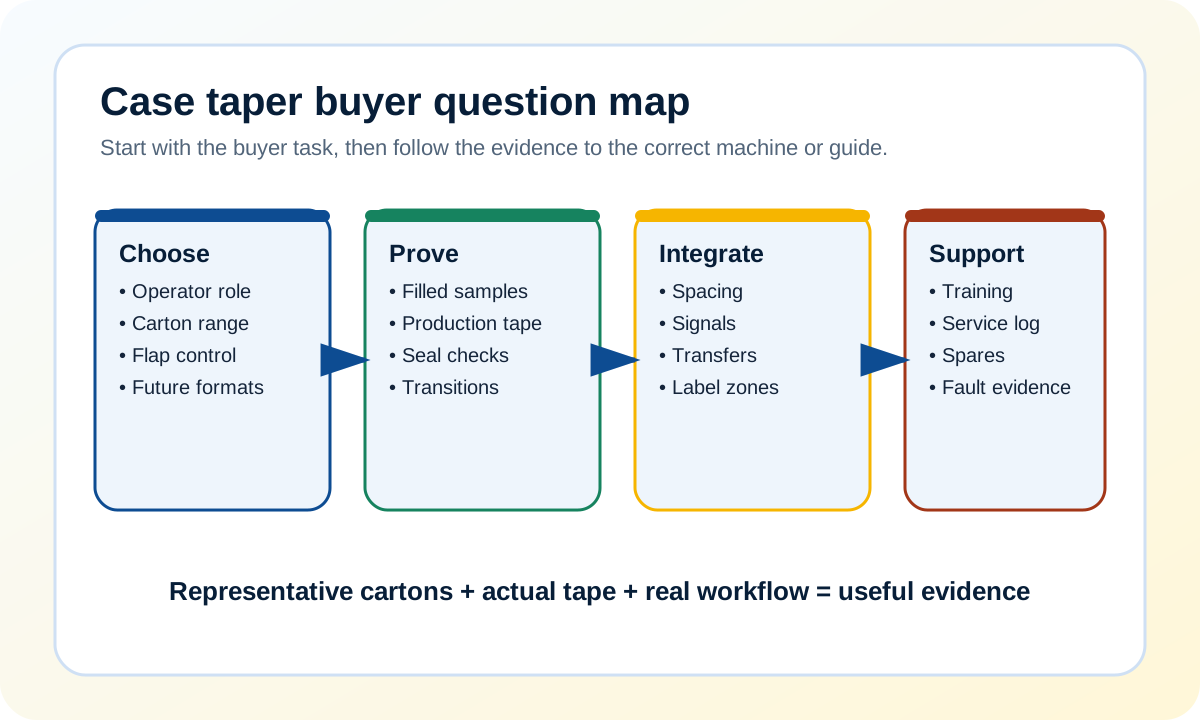
Choose the question that matches the decision
The machine is only one part of the result. These resources separate carton condition, tape application, infeed control, automation responsibility and line acceptance so a buyer can identify the evidence needed next.
A case taper can apply tape automatically, but a safe and dependable production process still needs defined carton preparation, supervision, replenishment, fault response and line-control responsibilities.
One case taper can serve several benches when cartons can be merged, queued and released without creating unsafe handling, excessive walking or an unstable peak-demand bottleneck.
Tape, labels, barcodes and printed codes should be treated as one carton-surface plan so sealing does not cover identification and later labelling does not interfere with the tape path.
There is no universal carton gap: the required spacing depends on the selected machine, carton length, flap-closing or adjustment sequence, sensor logic and the equipment before and after the sealer.
Future-proofing should be based on credible carton families and packaging plans, not an unlimited range that makes the machine more complex without a real production need.
A carton becomes a poor automatic-sealing candidate when it cannot remain square, supported and predictably guided through the belts, flap-closing and transfer zones under normal production variation.
Variable tape tails are a symptom, not a diagnosis. The cause can sit in carton presentation, pitch, tape tracking, wipe-down, cut-off timing, tape condition or wear within the tape-head mechanism.
Cartons usually skew because they enter off centre, receive unequal guiding or drive contact, lose base support at a transfer, or carry a load that makes them unstable under acceleration.
Use the answer in context
Each answer explains the variables and evidence that change the decision. Final case taper suitability still depends on the selected machine, representative filled cartons, production tape, the way flaps are prepared, utilities, surrounding conveyors and the site’s safe operating requirements.
For a new project, combine these resources with the case taper selection guide, the enquiry checklist and the factory acceptance test guide. For a fault, preserve the current conditions and use the carton sealing defect diagnosis method before changing several variables.
Application review
Send the carton range, filled weights, tape, flap condition, output pattern and a layout or video. Lancing can use that evidence to define the machine and trial questions that matter.
Deep operational answers
Use these guides when a buyer question needs a complete test method rather than a short answer.
Cartons, tape, scenarios and evidence.
Accepted output, stops and quality.
Events, checks and records.
Identity, lead time and maintenance history.
New buyer questions
Use the full guides where the answer depends on the exact carton, tape and application system.
Usually, provided the filled regular slotted carton is square, the outer flaps meet at the centre seam and the external dimensions fall within the verified machine range. The code does not prove board quality or tape compatibility. Review the FEFCO 0201 guide.
Some self-adhesive paper tapes can run on compatible pressure-sensitive tape heads. Water-activated gummed tape needs a dedicated wetting and dispensing process. Compare the paper tape systems.
Some grades are intended for automatic application, but print repeat, unwind, brake, cut-off, board adhesion and tamper evidence must be tested separately. Read the printed and security tape guide.
Use the real board and tape under controlled application and handling conditions, then record immediate and delayed seal results. Plan a controlled adhesion trial.