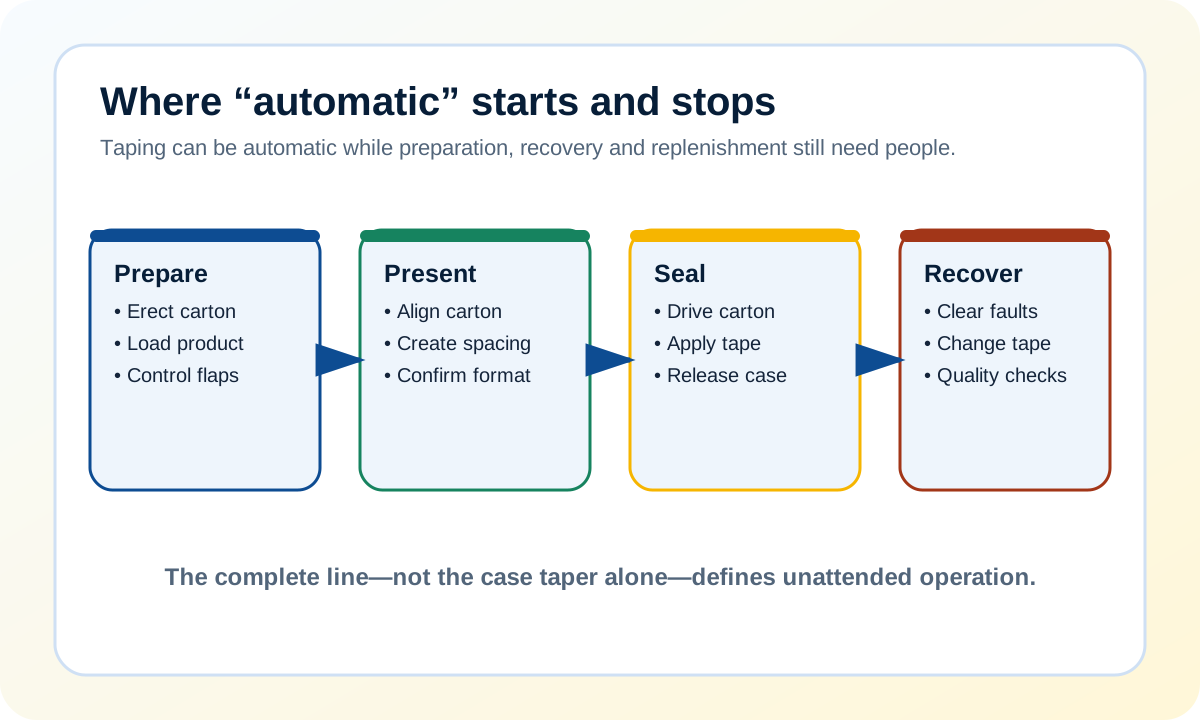
The useful question is not whether the tape heads move without a hand on the carton. It is which activities occur before, during and after sealing, who owns each activity and what happens when normal flow is interrupted. An automatic case sealer can only perform the functions included in its configuration. Carton erection, product loading, top-flap folding, coding, inspection and palletising may sit elsewhere in the line.
Define the automation boundary before comparing machines. A line drawing should identify the last controlled point upstream, the sealing machine, the first controlled point downstream, the expected carton condition at each transfer and the person or control system responsible for abnormal cases.
| Activity | Can be automatic? | What still needs to be defined |
|---|---|---|
| Carton presentation | Yes, when suitable infeed equipment is provided. | Orientation, squareness, spacing and how damaged cartons are prevented from entering. |
| Flap handling | Only if the selected configuration includes the required flap-closing function. | Whether top flaps arrive open, pre-folded or automatically closed. |
| Tape application | Yes, within the machine and tape head’s confirmed operating conditions. | Tape replenishment, approved roll, threading, cut-off quality and inspection frequency. |
| Fault recovery | Some controlled stops and restarts can be automated; physical recovery may not be. | Safe access, isolation, jam removal, reject handling and restart authorisation. |
| Quality release | Inspection can be manual or automated depending on the project. | Acceptance standard, sampling frequency, reject route and escalation. |
Which operator tasks remain when tape application is automatic?
Automatic tape application normally removes the repeated hand-taping action, but it does not automatically remove every human task. The remaining work can include loading or closing cartons, keeping the infeed clear, replenishing tape, checking seals, clearing rejected cartons, cleaning the area and reporting wear or recurring faults.
Map the real shift rather than the ideal demonstration. Include start-up checks, changeovers, breaks, roll changes, minor interruptions and end-of-run clearance. This shows whether labour is genuinely released or simply moved to another point in the process.
What must upstream equipment provide to an automatic case taper?
Upstream equipment must deliver a carton in the condition agreed for the sealer: correctly oriented, sufficiently square and stable, with the required flaps prepared, at a controlled spacing and without an unresolved fault. The exact condition depends on whether the sealer includes flap closing and automatic size adjustment.
The upstream release signal and physical transfer should be tested together. A conveyor may be running while still presenting cartons too close together, off centre or during a downstream blockage. The controls narrative should define when a carton may be released and who owns the gap before the sealer.
How should faults and jams be recovered safely?
Fault and jam recovery must follow the machine instructions, guarding arrangement and the site’s risk assessment. The safe method may require a controlled stop, isolation of hazardous energy and access only by trained or authorised people. Recovery should never depend on defeating a guard or reaching into moving belts, rollers or tape-head mechanisms.
Record where jams occur, the carton involved, the machine state and the action taken. HSE guidance on work equipment and machinery explains the need for suitable equipment, controlled risks and safe maintenance; the final method remains specific to the installed machine and workplace. See HSE work equipment and machinery guidance.
What evidence proves that automatic operation is dependable?
Dependable automatic operation is shown by a sustained trial using representative filled cartons, normal production tape, realistic spacing and the planned upstream and downstream equipment. The trial should include normal running, common size changes, tape replenishment, a blocked outfeed, a controlled stop and restart, and the expected reject or fault route.
Measure completed acceptable cartons at the end of the relevant process, not the unloaded conveyor speed. Keep a record of stoppages, seal defects, operator interventions and unresolved actions so the quotation or acceptance decision is based on the whole process.