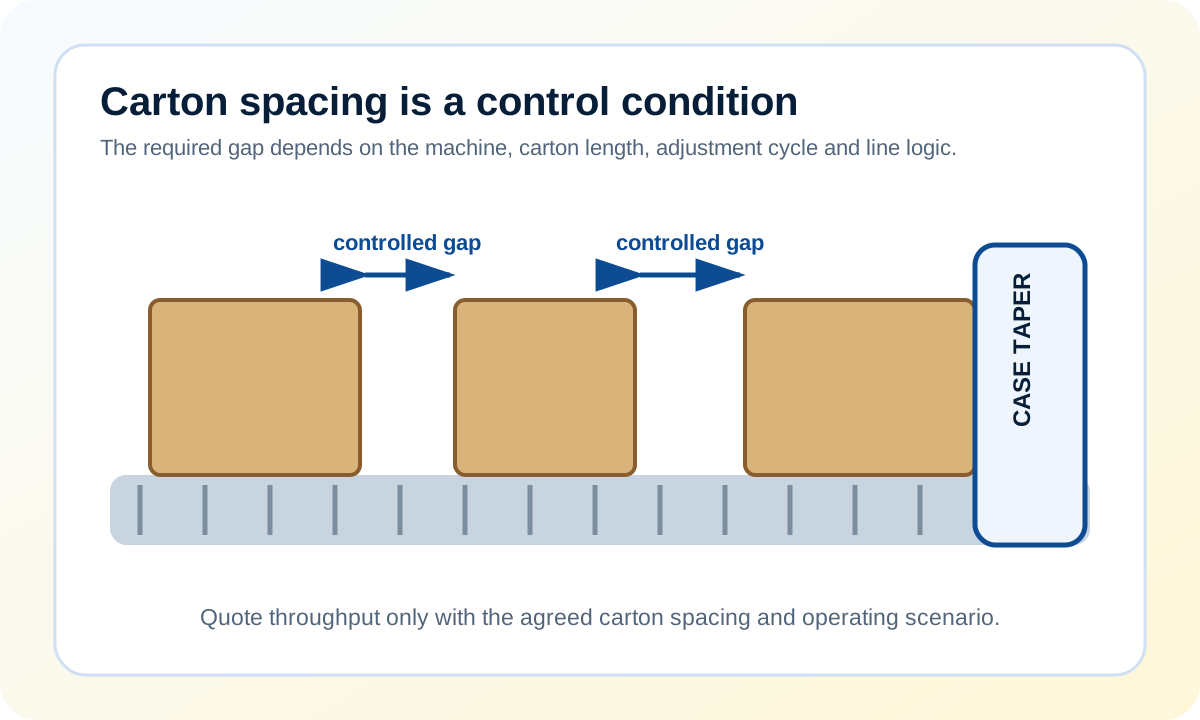
Spacing is usually better described as carton pitch: carton length plus the clear gap to the following carton. A nominal time gap can produce different physical distances when conveyor speed changes, while one fixed distance can create different cycle time for short and long cartons. The control method must match the process.
Identify which device creates the gap. It may be an upstream conveyor, a metering belt, a stop gate, a sensor-controlled release or an operator following a defined presentation method. If responsibility is shared or unspecified, carton bunching often appears during start-up, restart or a downstream blockage.
| Condition | Why spacing matters | What to test |
|---|---|---|
| Uniform-size batch | The sealer still needs a repeatable release even if no automatic size adjustment occurs. | Normal flow, short interruption and restart at the agreed pitch. |
| Random-size flow | The adjustment sequence may need a clear carton boundary and stable detection. | Common-to-common, small-to-large and large-to-small transitions. |
| Automatic flap closing | The mechanism must complete its sequence without the following carton entering too early. | Open-flap presentation, flap behaviour and recovery after an interrupted cycle. |
| Shared infeed | Two lanes can release together and remove the intended gap. | Merge priority, sensor hand-off and queue behaviour under peak arrivals. |
| Blocked outfeed | Cartons may accumulate back through the sealer if stop logic is late or unclear. | Blocked signal, upstream inhibit, controlled clearing and restart. |
Which device should create the gap between cartons?
One defined device or control function should own carton release into the case taper. Depending on the layout, that may be an upstream metering conveyor, stop gate, powered belt zone or operator method. The important point is that the owner can hold the next carton until the sealing zone is ready.
Document the sensor or condition that grants release and the signal that removes permission. This prevents two suppliers from assuming the other equipment controls spacing.
Does a random-size case taper need more spacing than a uniform machine?
A random-size case taper may need a distinct carton boundary so sensors and adjustment mechanisms can recognise the next case and return or reposition as required. Whether that means a larger gap is model-specific; it cannot be set reliably from the machine category alone.
Ask for the approved minimum pitch across the intended carton matrix and confirm it during a mixed-size trial. Include back-to-back common formats as well as the smallest and largest cases.
What should happen to carton spacing after a stop and restart?
After a stop, the line should retain or deliberately recreate the gap required by the sealer. A restart that releases every queued carton at once can produce bunching even when steady-state spacing is correct. The controls sequence should restart zones in an agreed order and inhibit upstream release until the sealing area is ready.
Test a normal operator stop, downstream blockage, sealer fault and power or control recovery as appropriate to the project. Record where each carton remains and which action authorises movement again.
How should carton pitch be measured during a trial?
Measure carton length and the clear distance to the next carton at a defined reference point, then record the conveyor state and carton formats. For variable sizes, also record the order of cartons. Video from a fixed position can help compare stable runs with a fault or transition.
Relate pitch to acceptable finished cartons at the end of the process. A large gap may prevent interference but unnecessarily reduce output; a small gap may appear fast until it causes missed detection, adjustment faults or poor transfer.