Case sealing machinery specialists — UK supply, installation and support01494 623015 · sales@lancinguk.com

Line integration

Case taper line integration with conveyors and packing areas

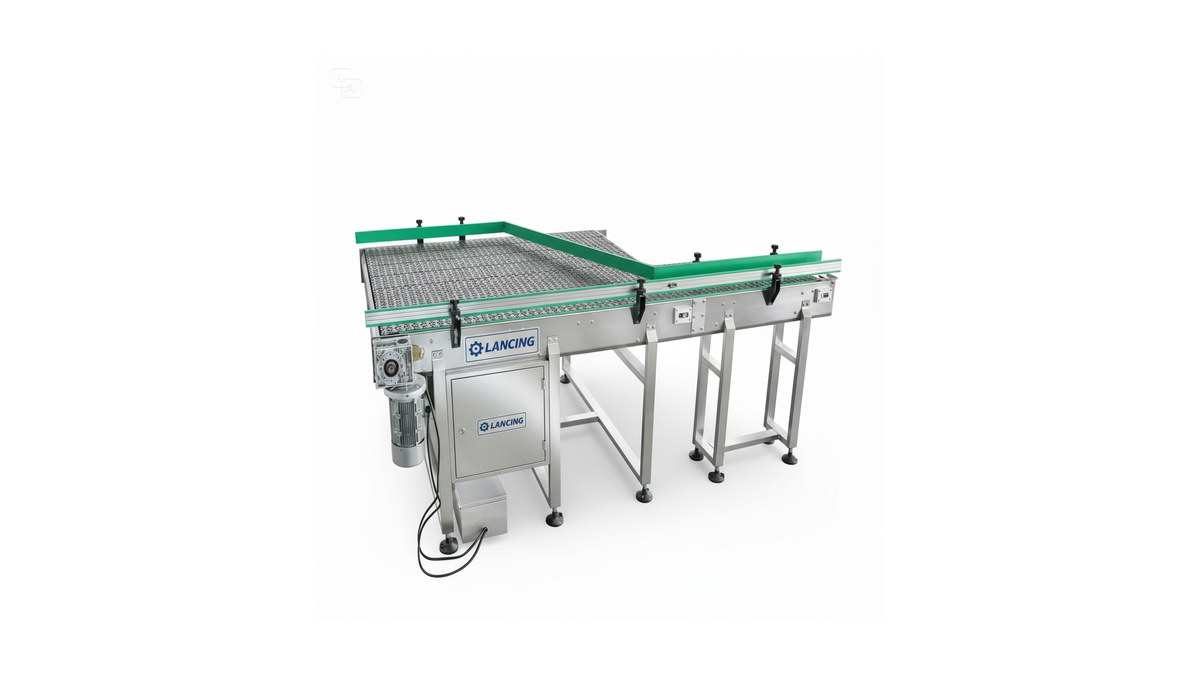
Integrate a case taper with existing packing benches, conveyors, labelling stations and dispatch flow.

Conveyor and case taper line integration for carton sealing

Integration starts with carton movement

A case taper works best when cartons arrive square, spaced and stable. Conveyor transfers, bench positions and operator handover all affect how smoothly the sealing stage runs.

Height and direction

Check conveyor height, case travel direction and whether cartons need to turn, accumulate or transfer after sealing. Even small layout issues can create jams or awkward handling.

Equipment around the sealer

Many sites combine sealing with checkweighing, labelling, scanning, accumulation or palletising. These stages should be planned together rather than added randomly.

Practical information to send

A simple line drawing, photos and a short video of carton flow can often answer more questions than a long written description.

Next step

For a practical recommendation, send carton dimensions, packed case weight, tape details, target output and photos of the current packing area. The aim is to match the case taper to your cartons and workflow, not to force a standard machine into the wrong process.

Use the case taper quote form or call 01494 623015.

Case taper line integration with conveyors and packing areas FAQ

Can a case taper connect to conveyors?

Yes, case tapers can often be planned with infeed and outfeed conveyors.

Do I need a full line drawing?

A sketch and photos are often enough for an initial discussion.

What if space is limited?

Compact or semi-automatic options may suit tight spaces, but the carton flow must be checked.

Integration definition

Fix the carton transfer, control responsibility and access before finalising the sealer position.

A case taper can be mechanically compatible with a conveyor but still perform poorly if cartons arrive skewed, touch during adjustment or cannot discharge when the next machine stops.

InterfaceConfirmEvidence
Infeed transferConveyor surface level, gap, carton support, direction and minimum straight length.Dimensioned drawing and photographs with a case in position.
Case releaseWho or what controls spacing and what happens when the sealer is unavailable.Sequence description or control narrative.
Outfeed transferCase orientation, accumulation, label or scan position and downstream stop response.Layout showing all downstream equipment.
UtilitiesElectrical supply, isolation, controls and compressed air where the selected functions require it.Site utility schedule and final machine data.
AccessTape loading, changeover, cleaning, guard opening and service clearance.Plan view with operating and maintenance zones.

Keep carton-sealing ownership on this site

Use this page to define the case taper’s mechanical and control interfaces. For detailed conveyor selection, accumulation and transfer design, use packagingconveyors.co.uk. For a complete multi-machine packaging line, use packaginglines.co.uk. Cartoning and carton-forming projects belong on cartoningmachines.co.uk, while broader automation projects can be reviewed through packagingautomationuk.co.uk.

Test start, stop and blocked conditions

Acceptance should include normal running, upstream starvation, downstream blockage and restart. Confirm that cases remain controlled, the machine does not release into a stopped conveyor and operators understand normal recovery using the supplied instructions.

Allow for the largest case and service access

Use the maximum operating envelope, not only the machine frame, when checking space. Include carton overhang, guards, doors, tape-roll replacement and the access required to remove or service the tape heads.

Final technical resource layer

Write the integration boundary before commissioning

Define which equipment releases cartons, controls spacing, reports blocked conditions and authorises restart. Mechanical connection alone does not define line behaviour.

Functional description

List ready, run-permit, carton-present, downstream-blocked, fault and mode information, together with the owner of each signal.

Controls and line-signals guide

Physical survey

Measure line heights, transfers, access, utilities, control locations and safe maintenance space.

Site survey checklist

Acceptance sequence

Test normal flow, starvation, blockage, fault, restart and changeover with representative cartons.

FAT guide

Safety integration: Production signals and safety-related controls have different purposes. Emergency stopping, guarding, interlocking and stored-energy control require a competent, site-specific design and validation.

Buyer questions

Questions about the case-taper line boundary

Reliable integration assigns physical transfer, carton release, stop and restart responsibilities to named equipment functions.

How should cartons from multiple infeed lanes be merged before sealing?

Use a controlled merge that grants one lane permission to release, maintains carton orientation and creates the approved pitch before the case taper. The merge should prevent side impacts and define queue limits. Test simultaneous arrivals and recovery after a blockage, not only a quiet single-lane run.

Which device owns carton spacing at the case-taper infeed?

One explicit upstream device or control function should own release into the sealer. It may be a metering conveyor, stop gate, controlled zone or operator method. The interface must state the ready condition, release permission and when permission is removed so the sealer does not receive a following carton too early.

How should stop, restart and fault signals be agreed between suppliers?

Write a simple controls narrative and signal list that states what each status means, which equipment sends it, what the receiving equipment does, how faults are latched or acknowledged and which conditions permit restart. Then test normal stop, downstream blocked, sealer fault and controlled restart with cartons in realistic positions.

What should be checked where a sealed carton transfers to the next machine?

Check height and lateral alignment, support across the gap, carton orientation, guide continuity, speed relationship, available accumulation, label or code clearance, sensor view and what happens when the receiving machine is not ready. Test the shortest, longest and least stable filled cartons because transfer risk changes with base length and centre of gravity.