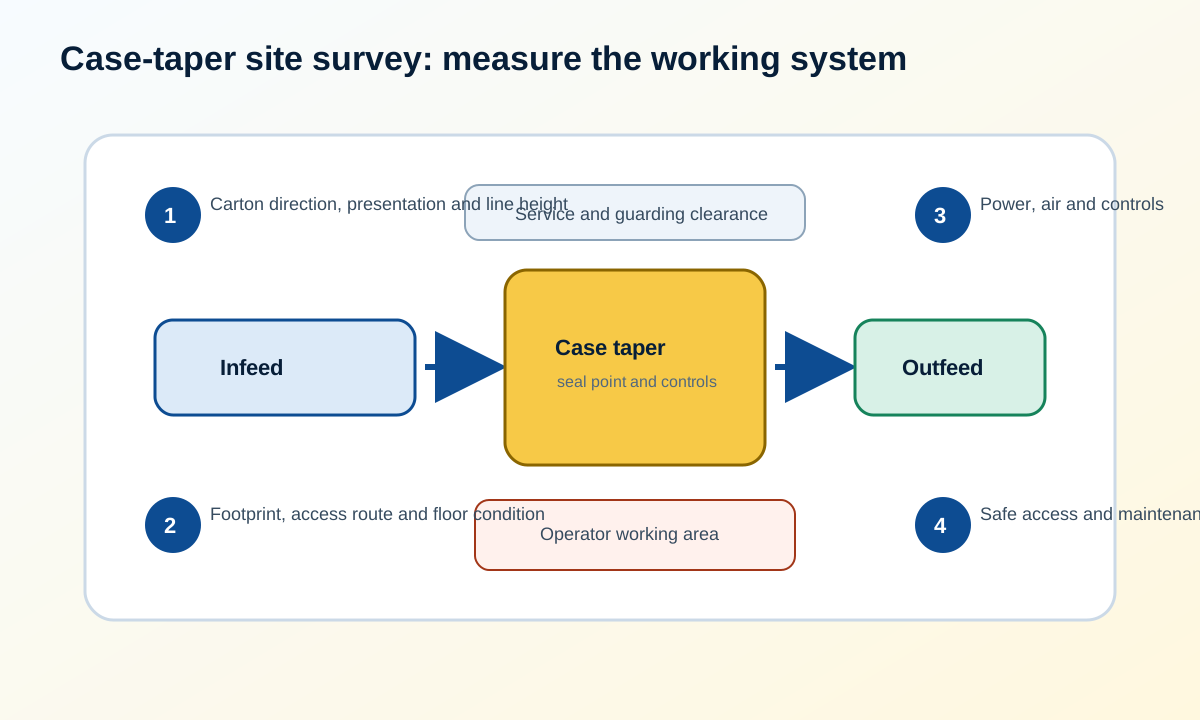
Survey the process, not only the available floor space
A case taper can fit inside a measured rectangle and still be difficult to operate, maintain or integrate. A useful survey records how filled cartons approach, where operators stand, how cartons leave, where accumulation occurs and how the equipment can be accessed safely. It also identifies who is responsible for conveyors, utilities, controls and any modification to the surrounding line.
Record the physical layout
Draw the carton direction and reference all measurements from fixed points such as columns, walls or existing conveyor centre lines. Record the available length, width and height, floor level, obstructions, doors, drains, kerbs, overhead services and the route from unloading point to final position. Include space for guards, electrical enclosures, tape-roll changes, cleaning and maintenance rather than measuring only the operating envelope.
| Survey area | Information to record | Decision supported |
|---|---|---|
| Carton flow | Direction, orientation, spacing, minimum/maximum case and filled weight. | Machine type, guide arrangement and transfer planning. |
| Heights and transfers | Existing conveyor top, floor variation, required infeed/outfeed and adjacent equipment. | Whether a level transfer, transition or conveyor modification is needed. |
| Operator access | Working position, reach, walkways, tape loading and normal intervention points. | Ergonomics, guarding and station layout. |
| Service access | Space around tape heads, drives, controls and removable guards. | Safe maintenance and realistic downtime planning. |
| Utilities | Available electrical supply, isolator position and compressed air where applicable. | Confirms site provision after the selected machine specification is known. |
| Controls | Upstream/downstream equipment, PLC responsibility, stop/restart and fault requirements. | Defines the integration scope and acceptance tests. |
Photograph every boundary
Take an overall photograph in each direction and close-ups of the infeed, outfeed, floor, utility points and existing controls. Include a known measurement or labelled sketch so scale is clear. Photograph a representative filled carton and its flap condition at the sealing point. Short video is useful where operators currently push, rotate or queue cartons.
Confirm environmental and operational conditions
Record dust, washdown restrictions, ambient or chilled conditions, condensation risk, cleaning method, shift pattern and the time available for changeovers or maintenance. These conditions can affect tape selection, guarding, electrical equipment, material handling and maintenance frequency. They must be checked against the final machine and tape specifications rather than inferred from a generic case taper.
Turn the survey into an ownership schedule
List every interface and owner: machine positioning, offloading, anchoring if required, electrical supply, air connection, conveyor modification, network or PLC work, guarding integration, risk assessment, operator training and acceptance. The controls and line-signals guide helps define the control boundary, while the FAT guide identifies what can be tested before delivery.