What a case taper FAT should prove
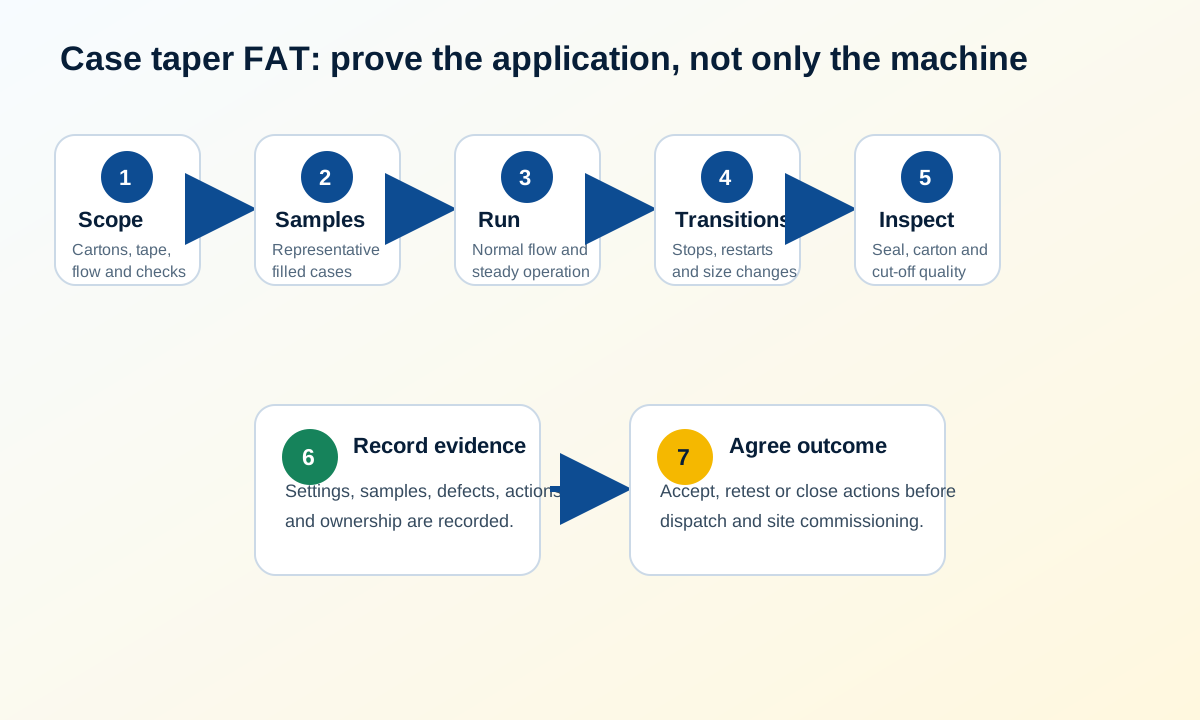
A factory acceptance test should confirm more than whether the conveyor and tape heads run. It should show that the proposed case-taping process can handle the agreed carton matrix, the nominated tape and the way cartons will be presented in production. The result is an evidence pack that separates accepted performance, open actions and items that can only be confirmed after installation.
The most useful FAT starts with a written scope. Identify the smallest, largest and most common cartons; the filled case condition; whether flaps arrive folded; whether sizes are uniform or mixed; and which downstream equipment must remain clear. Use real production cartons where possible. Empty demonstration boxes can behave differently from filled cases because panel stiffness, flap tension, centre of gravity and belt contact all change.
Freeze the test inputs before the run
Record each sample by a simple identifier and keep its dimensions, board condition, fill weight, tape type and preparation method with the results. Include cartons that represent normal variation rather than only the easiest sample. Where a production range includes worn returnable cases, highly recycled board, printed or coated surfaces, cold cases or bulky contents, those conditions should be visible in the sample set rather than introduced after approval.
| FAT input | What to agree | Why it matters |
|---|---|---|
| Carton matrix | Minimum, maximum and common formats, including orientation and filled condition. | Prevents a pass based on one convenient carton that does not represent production. |
| Tape | Manufacturer, grade, width, roll format and conditioning state. | Unwind, adhesion and cut-off behaviour are part of the application. |
| Presentation | Flap condition, spacing, entry alignment and upstream transfer. | A machine cannot compensate indefinitely for unstable or skewed carton feed. |
| Acceptance evidence | Seal checks, carton damage limits, transition behaviour and records required. | Turns a subjective demonstration into an auditable decision. |
Run scenarios that reflect production
Begin with setup and a controlled first sample, then test steady operation with the agreed carton and tape. Add the real transitions that create risk: a normal stop and restart, an upstream pause, a downstream blocked condition, a size change, the smallest-to-largest transition for mixed formats, and recovery after a routine operator intervention. The exact sequence depends on the proposed controls and machine type.
For each scenario, inspect the top and bottom seals where applicable. Check that tape tracks over the intended seam, extends consistently onto the end panels, is wiped onto both flaps, is cut cleanly and does not fold back or lift. Also inspect the carton: guides and drives should not crush panels, pull flaps apart or mark a customer-facing area beyond the agreed limit. A passing seal should remain traceable to the sample and settings that produced it.
Separate FAT, site acceptance and production proving
Factory testing can confirm the machine and agreed samples under controlled conditions. It cannot fully prove the customer's floor, utilities, upstream controls, operator practice or downstream accumulation. Record those site-dependent items for commissioning or site acceptance rather than leaving them implicit. The case taper site survey checklist and line controls guide help define those boundaries before delivery.
Use an action register, not an informal promise
At the end of the FAT, list accepted tests, failed or deferred tests, corrective actions, the responsible party and the evidence needed for closure. Photograph approved seals and retain representative samples where practical. If a setting is format-specific, record it. If a change affects guarding, controls or the intended use, it must be reviewed by competent people before retest.