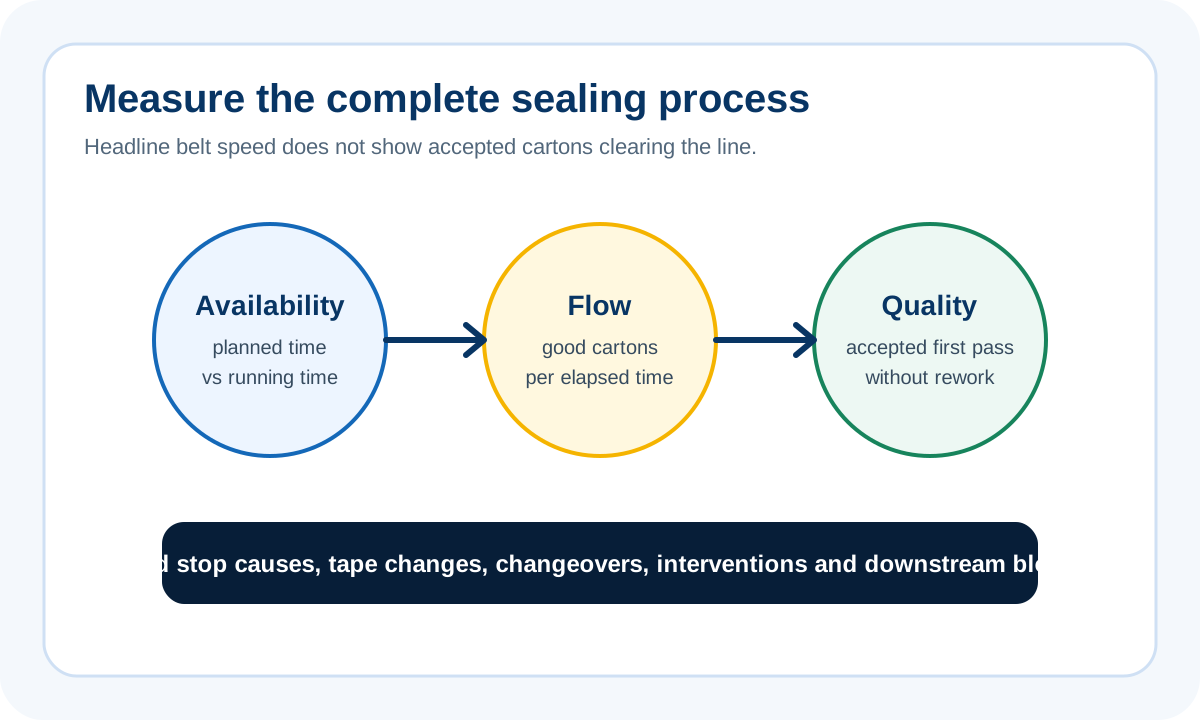
Case taper performance should be measured as accepted cartons leaving the complete sealing process over a defined production period. Record planned time, actual running time, good cartons, rework, stops, tape changes, format changes, operator interventions and downstream blocking. A conveyor or belt-speed figure cannot show sustainable output on its own.
Why is headline speed not enough?
Published speed may describe belt travel, a maximum cycle rate or performance with a particular carton. Real output depends on carton spacing, flap preparation, operator loading, format sequence, tape replenishment, line controls, downstream capacity and the proportion of cartons that pass first time. Compare equipment only after the test conditions and the definition of an accepted carton are the same.
Which performance measures should be recorded?
| Measure | Simple calculation | What it reveals |
|---|---|---|
| Good-output rate | Accepted cartons ÷ elapsed production time | The useful output delivered by the complete sealing point. |
| Availability | Running time ÷ planned production time | How much planned time was available for sealing rather than stopped. |
| First-pass seal quality | Cartons accepted without rework ÷ cartons sealed | Whether output depends on hidden inspection or retaping labour. |
| Intervention rate | Operator interventions ÷ cartons processed | How often the process needs help to continue. |
| Changeover time | Last accepted carton of one format to first accepted carton of the next | The real effect of size changes on mixed production. |
These measures are methods, not universal targets. The acceptable result must be agreed for the actual production requirement, machine type and surrounding line.
How should stop reasons be classified?
Use a short, consistent reason list rather than one general “machine stopped” code. Separate upstream no-carton conditions, carton-presentation faults, case taper faults, tape changes, operator pauses, downstream blocking, planned changeover and quality holds. This prevents time caused by another process from being assigned automatically to the sealer.
- Upstream: no carton, poor flap preparation, skewed entry or uncontrolled release.
- Case taper: tape-head, belt, sensor, guide, control or guard-related stop requiring diagnosis.
- Downstream: blocked conveyor, labeller, inspection, accumulation or palletising constraint.
- Planned: format adjustment, tape replenishment, cleaning, inspection or maintenance.
- Quality: seal held for inspection, rework or investigation.
How long should a performance test run?
Run long enough to include the events that matter. A short uninterrupted run may confirm basic function but will not represent tape changes, normal queues, common size transitions or shift routines. Define the test window in advance and record the carton mix, staffing, tape and line conditions. Repeat the same method when comparing before and after performance.
How does performance measurement support a buying decision?
Measure the current process before specifying a machine. The record shows whether the main loss is hand taping, carton preparation, tape failures, downstream blocking or the sealer itself. Use the same acceptance definitions during a sample trial, factory acceptance test and site proving so commercial comparisons remain consistent.
The case taper ROI guide can then use measured labour, rework and downtime inputs rather than assumed savings.