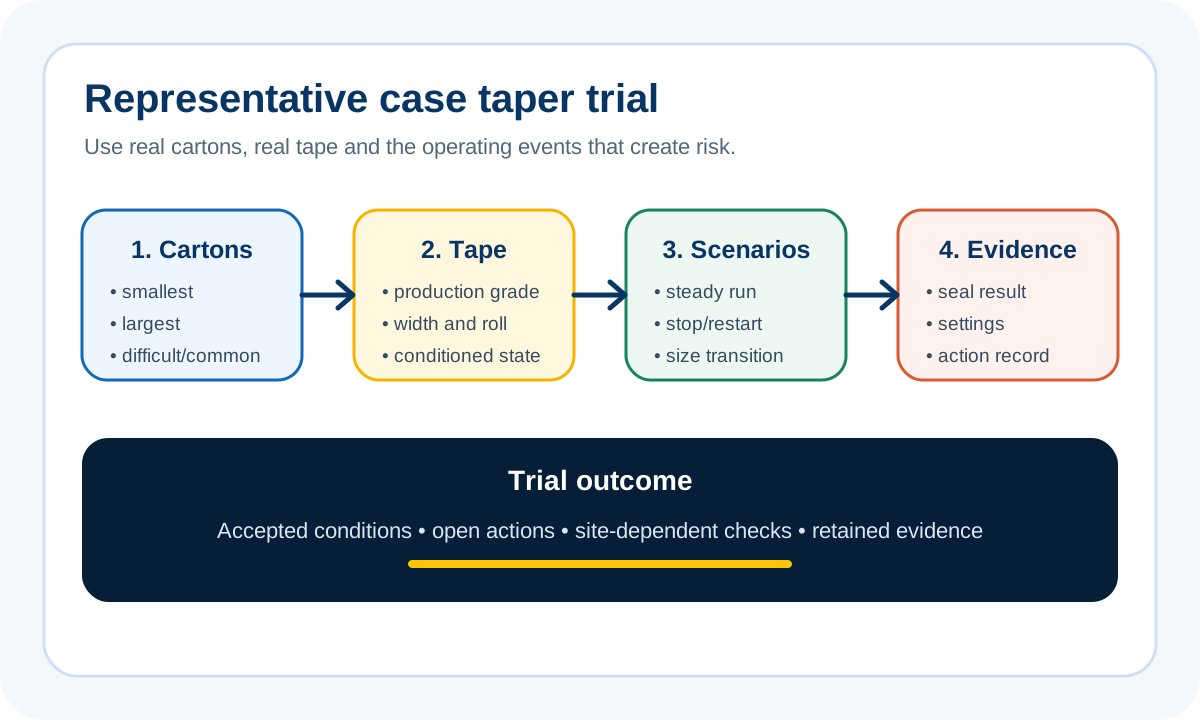
A useful case taper sample trial tests the real application, not just whether a carton passes through a machine. It should use representative filled cartons, the intended production tape, realistic flap presentation and the operating events that may change the result. The outcome should record accepted conditions, unresolved actions and checks that remain site-dependent.
What should a case taper sample trial prove?
A pre-purchase sample trial should show whether the proposed machine family can convey the agreed cartons, apply tape in the intended position and release acceptable cases without avoidable damage or repeated intervention. It can also expose risks that are easy to miss in a brochure: weak or bulging board, short tape landing areas, flaps that spring open, labels near the tape path, unstable contents and difficult transitions between formats.
A sample trial is not the same as a formal factory acceptance test. The sample trial narrows the machine route and identifies application risks. A later factory acceptance test should use a written specification and agreed acceptance evidence for the selected machine.
Which cartons should be sent for testing?
Send the smallest, largest and most common cartons in their normal filled condition. Add any format known to be difficult: tall and narrow cases, light boxes, heavy cases, overfilled cartons, weak board, short flaps, printed or coated surfaces, returnable cartons or packs with an uneven centre of gravity. If carton supply varies between batches, samples should represent that variation rather than one ideal delivery.
| Sample group | What it helps confirm | Evidence to record |
|---|---|---|
| Smallest format | Guide range, tape-head actuation, end-tab landing and transfer through the machine. | Dimensions, filled weight, seam position and accepted seal photographs. |
| Largest format | Machine opening, drive contact, flap control, stability and outfeed clearance. | Dimensions, filled weight, panel condition and any marking or deformation. |
| Most common format | Normal operating result, operator task and sustainable workflow. | Setup, tape roll, repeated seals and intervention count. |
| Difficult format | Known application risk rather than only a convenient demonstration case. | Fault condition, corrective action and any limitation or follow-up trial. |
What tape and application information is needed?
Supply a production roll or the complete tape specification, including manufacturer, product grade, width, roll length, adhesive family and normal storage or application conditions. The tape used for a trial should be conditioned in a way that represents production. A machine trial cannot establish universal tape suitability: board surface, recycled fibre, dust, temperature, dwell time and handling after sealing can all alter the result.
Photograph any labels, coding or graphics close to the centre seam. The carton sealing tape selection guide and tape and label clearance guide explain the information needed before the tape path is approved.
Which operating scenarios should be included?
- Confirm the sample identifiers, tape and machine setup before the first run.
- Run the most common carton repeatedly to establish a stable reference.
- Test the smallest, largest and difficult cartons under the agreed presentation method.
- For mixed sizes, test common-to-common, small-to-large and large-to-small transitions.
- Include a normal stop and restart, tape replenishment and any routine operator intervention.
- Check discharge to the intended outfeed condition rather than stopping the assessment at the tape head.
- Record accepted seals, failures, settings and actions while the evidence is still traceable.
How should the trial result be recorded?
Use a simple result sheet linking each run to the carton identifier, tape, machine setting, scenario and seal assessment. Separate accepted results from open actions and site-dependent checks. Keep photographs of the top and bottom seals where applicable, and retain approved samples when practical. A verbal statement that the machine “ran the box” is not enough to reproduce the outcome later.
Where the proposed case taper will operate in a connected line, continue with the production performance measurement guide so upstream release, downstream blocking and accepted output are included.