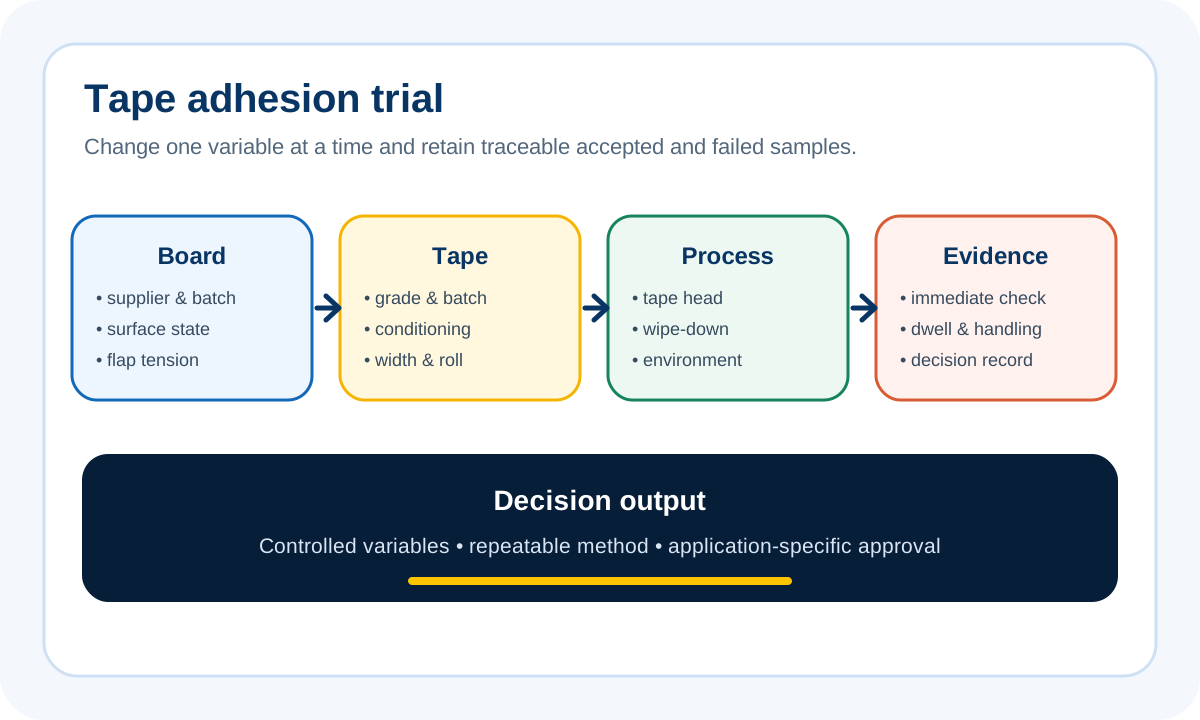
Test carton sealing tape on the actual production board, using the intended application method and representative handling conditions. Keep the carton batch, tape batch, temperature, surface state, application pressure, flap force and inspection timing traceable. A laboratory value can help compare materials, but it does not replace an on-machine trial with filled cartons and the real tape path.
Why does a controlled adhesion trial matter?
Tape adhesion can change when the carton supplier, recycled-fibre content, coating, dust, temperature, humidity, storage time or filled-case condition changes. If several variables change at once, a failed seal does not show whether the cause is the tape, board, machine setting, flap presentation or environment. A controlled trial changes one factor at a time and records the result.
Which variables should be recorded?
| Variable group | Examples to record | Why it affects interpretation |
|---|---|---|
| Carton | Supplier, style, board grade, batch, print/coating, dust, damage and external dimensions. | Different liner and surface conditions can change initial tack, wipe-down and fibre response. |
| Tape | Manufacturer, grade, backing, adhesive family, width, roll, batch and storage. | Products that look similar may have different unwind, tack, shear and temperature behaviour. |
| Environment | Carton temperature, tape temperature, room conditions, moisture or condensation. | The surface state at application can matter more than the later storage temperature. |
| Application | Tape head, brake/tension setting, wipe-down condition, speed, seam and end-tab result. | Insufficient pressure, poor tracking or a cutting fault can be mistaken for an adhesive problem. |
| Pack load | Filled weight, flap spring-back, bulging, centre of gravity and immediate handling. | The closed carton may place sustained force on the tape before the bond stabilises. |
| Inspection | Immediate result, later dwell, handling, stacking, transport simulation and opening. | A seal that looks acceptable at discharge may lift or creep later. |
What is a practical case-taper adhesion trial sequence?
- Define the question. State whether the trial is qualifying a new tape, a new carton, a new environment or a machine setting.
- Create identifiers. Mark every carton and tape roll so photographs and results can be traced.
- Condition samples. Store the tape and cartons in the agreed state before the test; record any deliberate cold or humid condition.
- Establish a reference. Run the currently approved combination, if available, before changing one variable.
- Apply the tape through the normal process. Use the intended case taper, operator presentation, speed and top/bottom seal arrangement.
- Inspect the application. Separate centring, wrinkling, cut-off, wipe-down and end-tab faults from adhesion observations.
- Inspect after dwell and handling. Recheck at agreed times and after normal transfer, stacking or storage.
- Record the decision. Approve only the tested combination and list limitations or further tests.
How should tape adhesion failures be classified?
- Immediate lift: an edge or end tab lifts before the carton leaves the sealing area.
- Delayed lift: the tape initially appears secure but releases after dwell, storage or handling.
- Adhesive transfer or residue: the tape separates in an unexpected layer or leaves inconsistent adhesive.
- Fibre tear: board fibres remain on the tape; this may indicate strong local adhesion but must still be interpreted against carton damage and the required opening behaviour.
- Backing failure: the tape stretches, splits, tears or cuts unpredictably.
- Closure movement: flap force, bulging or carton distortion opens the seam even though the tape itself has bonded.
When should the adhesion trial be repeated?
Repeat the controlled check after a material or process change that could affect the seal: a new tape grade or supplier, new carton board or coating, major size change, cold or humid application, different storage route, tape-head replacement, altered wipe-down components, unexplained rise in rework or a change to the line speed or handling sequence. Use the same result format so the new evidence can be compared with the approved reference.
How do laboratory tape tests relate to a machine trial?
Published standards provide controlled ways to describe pressure-sensitive tape and compare adhesion or shear behaviour. ASTM D5486/D5486M covers pressure-sensitive tapes for packaging, box closure and sealing. ASTM D2860/D2860M addresses adhesion to fibreboard under constant stress, and ASTM D3654/D3654M includes shear-adhesion procedures. These standards can support material qualification, but their results do not by themselves prove that a specific case taper, carton and operating environment will produce an acceptable seal.
Technical references for carton sealing tape tests
ASTM provides current scope information for D5486/D5486M, D2860/D2860M and D3654/D3654M. Use those sources to identify the applicable standard and obtain the full controlled procedure when required.