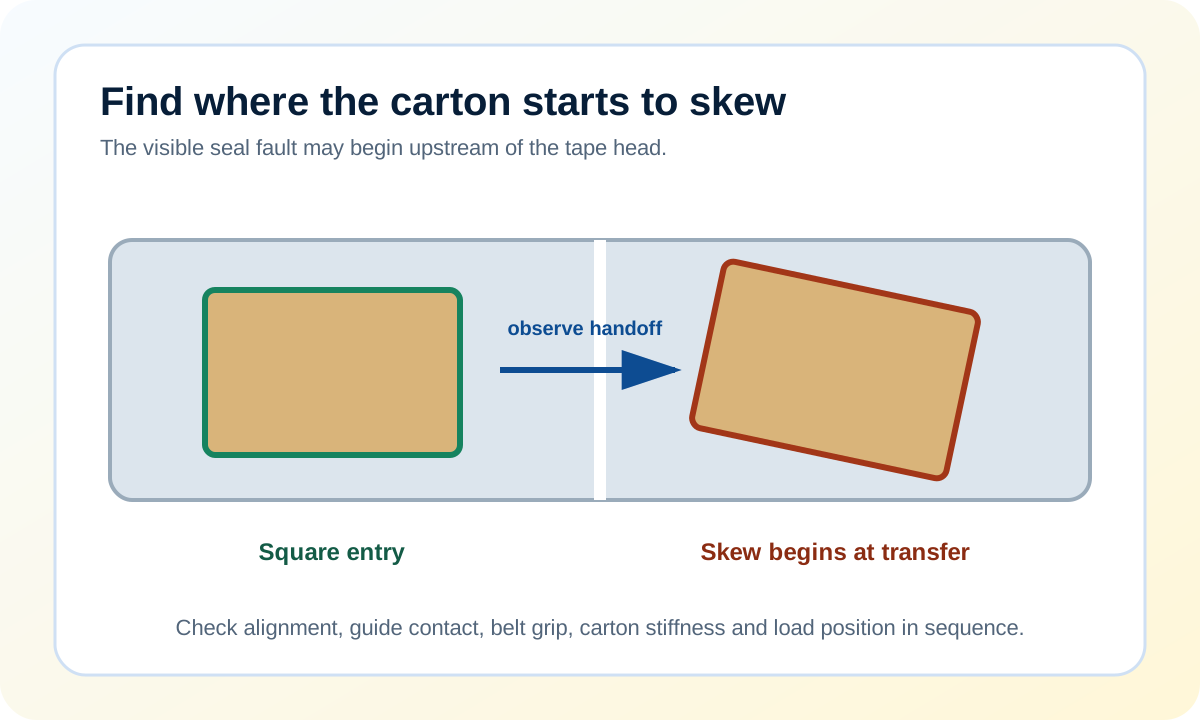
Start the diagnosis upstream. Mark a centreline and observe whether the carton is already angled before it touches the case taper. If it enters square and then rotates, note the exact point of first movement. A fixed camera view can reveal whether one belt contacts earlier, a guide pushes one corner or a roller gap removes support.
Use one approved carton and one known machine setup to establish a reference. Then test the affected format. Changing guides, belt pressure, speed and carton packing at the same time can hide the true cause and create a setting that works only temporarily.
| Where rotation begins | Likely investigation area | Controlled check |
|---|---|---|
| Before machine entry | Upstream guide, merge, operator presentation or conveyor tracking. | Observe centreline and carton angle at a fixed upstream datum. |
| At first belt contact | Unequal contact, width setting, panel condition or carton not centred. | Compare left and right contact timing with the machine stopped and safely set. |
| At a conveyor transfer | Gap, height step, roller condition, unsupported base or protruding flap. | Inspect support path and run representative filled cartons. |
| During flap closing | Open flap interference, overfill, top pressure or unstable contents. | Observe flap sequence and carton body movement separately. |
| Only after some running | Debris, belt contamination, heat, wear or setting drift. | Record time, condition and repeatability before safe maintenance inspection. |
Can an uneven product load make a carton rotate?
Yes. An off-centre, high or moving load can change friction at the base and how the carton responds when belts or guides apply force. The carton may look square while stationary but rotate during acceleration or at a transfer.
Test a representative filled carton and compare it with a controlled load. Review product restraint, dunnage, fill height and base support before increasing machine pressure to compensate.
Do side guides need to touch the carton continuously?
Guide contact depends on the machine and carton. Guides should establish a predictable path without crushing, scuffing or trapping the board. Continuous heavy contact is not automatically better and can increase drag or distort weak panels.
Use the machine instructions and approved setup. Check that the carton is centred and supported before it reaches the guide; a guide should not be expected to correct a severe angle created upstream.
Why does only one carton format skew?
One format may have different proportions, base construction, board stiffness, print coating, contents, flap condition or contact height. It may also sit near the edge of a transfer or adjustment range where small setup differences become significant.
Compare the affected carton against a stable format using a simple matrix: dimensions, filled mass distribution, panel condition, base flatness, guide and belt contact, and transition order. The difference usually points to the next controlled check.
What should be recorded before requesting service for carton skew?
Record the carton format and filled condition, when and where rotation starts, whether every carton is affected, the preceding format, current settings, any recent maintenance or tape change, and fixed-view video from the infeed and transfer where safe to obtain.
Do not enter guarded areas or reach near moving belts and rollers to obtain evidence. The final investigation and any adjustment must follow the machine instructions and site-specific safe system of work.