Why the carton belongs in the machine specification
A case taper applies tape to a moving corrugated case; it does not make an unstable carton square. Feed reliability and seal quality therefore depend on the carton, the contents, the tape and the machine setup working together. Cartons that share nominal dimensions can behave differently because of board construction, score quality, recycled content, printing, moisture, storage, damage and the way the product supports the panels.
Measure representative filled cases rather than relying only on the converter's nominal blank size. Record the outside length, width and height in the orientation used through the machine. Note bulging, taper, bowed panels and whether the top flaps meet at the centre seam without force. For mixed suppliers or board grades, keep samples from each source in the application trial.
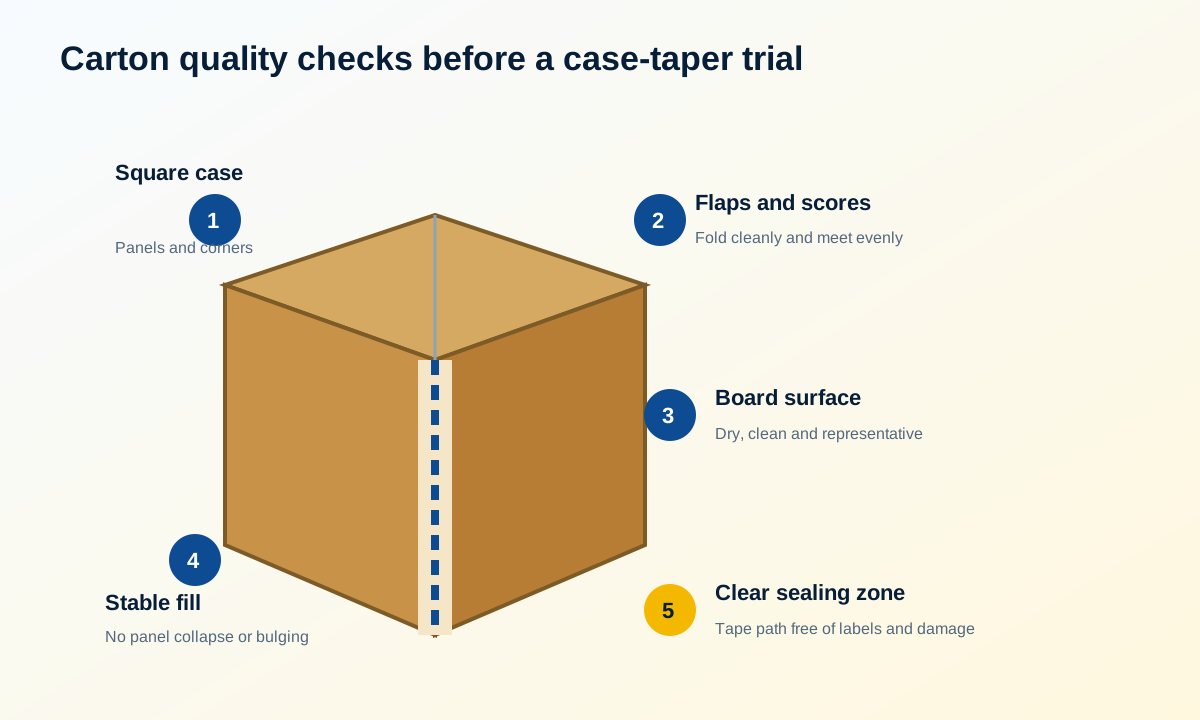
Five checks before a machine trial
| Carton feature | Practical check | Possible effect at the sealer |
|---|---|---|
| Squareness | Place the filled case on a flat surface and compare diagonals, corners and panel alignment. | A skewed case may enter guides unevenly and move the tape away from the seam. |
| Flaps and scores | Fold each flap through its normal movement and check slotting, overlap and spring-back. | High flap tension or damaged scores can open the seam before wipe-down. |
| Board surface | Inspect for dust, moisture, fibres, coatings, heavy print, abrasion and previous tape residue. | Adhesion can change even when the tape and machine settings remain the same. |
| Filled-case stability | Check panel support, bulging, loose product movement and centre of gravity. | Soft or top-heavy cases can skew, collapse under guide pressure or transfer poorly. |
| Sealing zone | Keep the centre seam and tape landing area free from labels, damage and obstructions. | Raised labels or torn board can interrupt wipe-down and create lifting edges. |
Use samples that represent variation
A useful trial includes the normal carton, the smallest and largest formats, and examples from the edge of acceptable production variation. Do not deliberately test damaged cartons as if they were acceptable output, but do include realistic differences in board batch, print, fill pattern and storage condition. Mark each sample so the result can be traced back to its condition.
If a fault appears, change one variable at a time. Run the same carton with a known tape, then the same tape on another representative carton. If the defect follows the board surface or cold condition, repeated mechanical adjustment may only move the symptom. The carton sealing defect diagnosis guide provides a controlled method for separating material, presentation and machine variables.
Carton quality and tape choice are linked
Tape backing, adhesive system, unwind and application conditions vary between products. Highly recycled board, cold surfaces, dust and short time between sealing and handling can alter the result. Use the tape supplier's current technical data sheet and test the actual tape roll in the intended environment. The carton sealing tape selection guide explains the information to record without assuming that one tape is suitable for every board.
Define an incoming carton standard
Once a working combination is approved, retain a reference carton and photographs of an acceptable seal. A simple incoming check can cover dimensions, squareness, flap condition, board damage, moisture exposure and the sealing zone. This gives production and maintenance teams a common baseline and makes it easier to distinguish a material change from a machine fault.