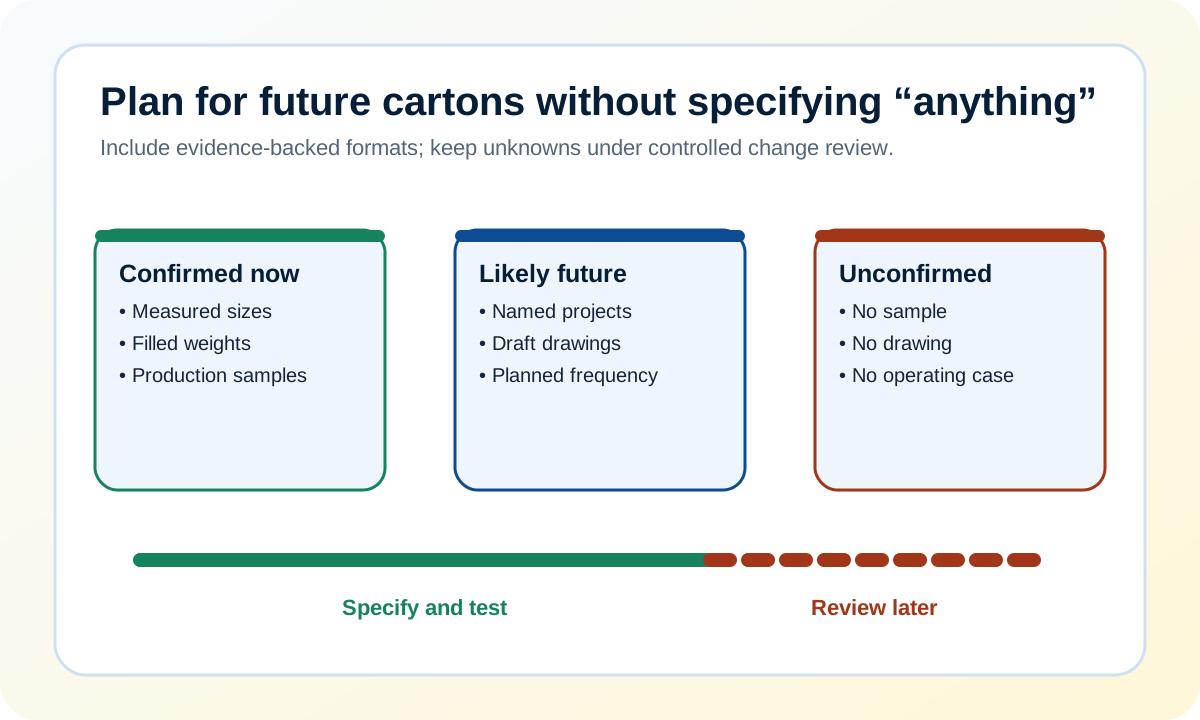
A case taper is selected around a physical operating window and a way of presenting cartons. Asking for the widest possible range can increase footprint, adjustment, guarding or integration complexity and may still not protect against a future carton with poor proportions or different flap behaviour. The better approach is a controlled format roadmap.
Create one row per carton family. Record external length, width and height, filled weight, board and surface condition, top-flap preparation, orientation, frequency and expected launch date. Identify the most common format separately from the extremes because it should not be compromised by rare or theoretical cases.
| Format status | Evidence expected | How to use it |
|---|---|---|
| Current production | Representative filled cartons, drawings, tape and observed process. | Must be included in selection and acceptance testing. |
| Committed new format | Approved drawing, packaging sample or signed project specification. | Include in the confirmed range or agree a documented later trial. |
| Likely family extension | Defined dimensional envelope and packaging assumptions. | Review as a design allowance, with final suitability subject to sample confirmation. |
| Speculative possibility | No fixed drawing or sample. | Do not present as guaranteed capability; record the uncertainty and future review route. |
| Exceptional/manual pack | Low-frequency or abnormal carton outside normal flow. | Decide whether it should remain a separate manual process rather than drive the main machine. |
Which carton dimensions matter when planning the future range?
External erected length, width and height all matter, but proportions and presentation can be as important as the individual numbers. A tall narrow carton, short wide carton and long lightweight carton can interact differently with belts, guides, transfers and flap-closing equipment even when each dimension is inside a nominal range.
Record orientation and the seam direction as well as dimensions. Confirm whether the carton is measured empty or filled and whether bulging, overfill or panel distortion changes the effective size.
How much size margin should be allowed for future cartons?
There is no universal percentage or dimensional margin. The sensible allowance comes from known packaging projects, common board and format families, machine architecture and the effect of the wider range on adjustment and stability. A margin should be explicit and testable rather than described only as “future-proof”.
Ask the supplier to distinguish confirmed formats from formats that appear possible on paper but have not been tested. Keep that distinction in the quotation and acceptance scope.
When is a separate process better for an unusual future carton?
A separate manual or dedicated process may be better when the carton is extremely infrequent, materially different in construction or proportion, requires a different closure method, or would force compromises on the main high-volume case-taping process.
Compare the cost and operating risk of widening the main machine against the actual frequency and commercial importance of the exceptional pack. The principal line should remain dependable for its real production duty.
How should a new carton format be introduced after installation?
Treat a new format as a controlled change. Review the drawing and physical sample, confirm it is within the approved machine and tape conditions, create or record the setting, run representative filled cartons, inspect top and bottom seals, and document release criteria before routine production.
Where the new format changes guarding, controls, line interfaces or intended use, obtain a competent review before operation. Keep the approved sample, setting and fault observations with the machine records.