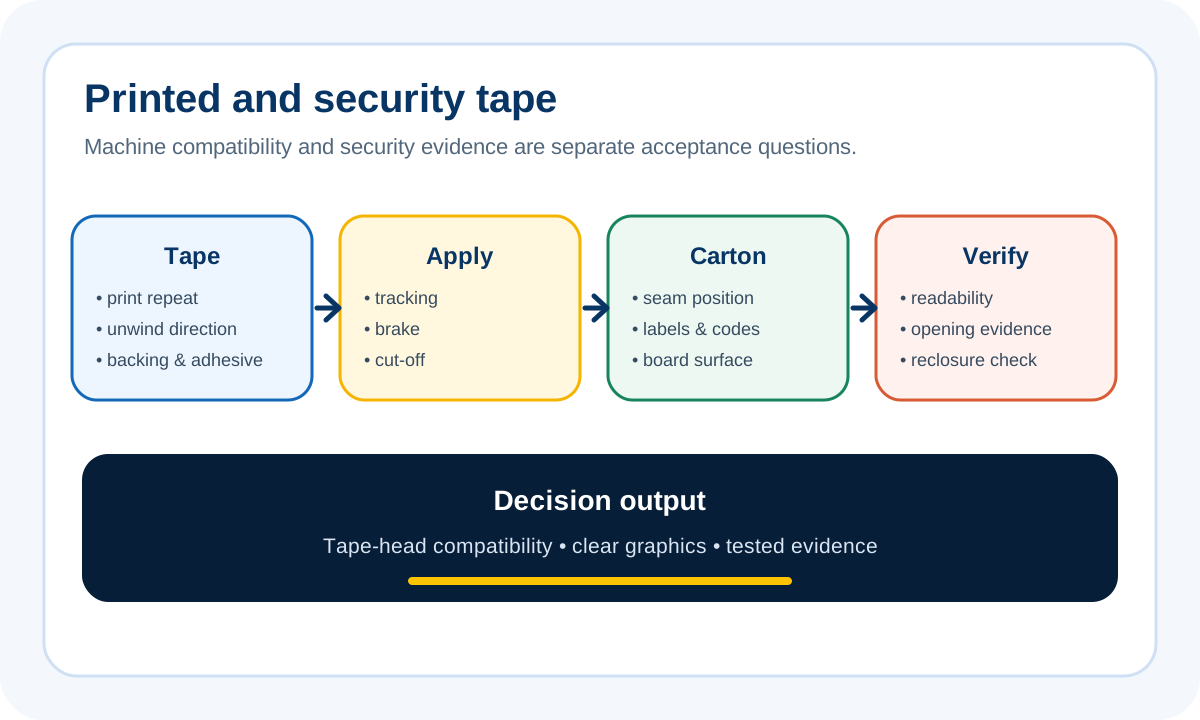
A case taper can apply some printed, branded and tamper-evident pressure-sensitive tapes when the exact tape is approved for automatic application and matches the tape head. Compatibility depends on the backing, adhesive, width, roll and core, unwind direction, brake behaviour, cut-off and carton surface. A standard case taper normally does not register each printed repeat to an exact graphic position on the carton, so print placement and cut position must be assessed realistically.
What is the difference between printed and tamper-evident tape?
| Tape purpose | What the tape is intended to do | What the case-taper trial must check |
|---|---|---|
| Branded or instructional tape | Carry a repeating logo, message, handling instruction or promotional print. | Print orientation, tracking, readability, cut position and whether the tape obscures labels or codes. |
| Security-printed tape | Make the seal more recognisable or discourage substitution with plain tape. | Consistent application, approved tape path and whether the security message remains visible through handling. |
| Tamper-evident or void tape | Show a visible change, message or fibre effect when removal is attempted. | Actual evidence on the production board, immediate and aged adhesion, opening behaviour and the effect of reclosure attempts. |
Will a case taper position a logo in the same place on every carton?
Not necessarily. A normal pressure-sensitive tape head applies tape as the moving carton actuates the mechanism. It controls the strip over the seam and the leading and trailing end tabs, but it does not usually read a print mark and register a repeated logo to a fixed carton coordinate. The printed repeat may therefore start and finish at different points from carton to carton.
If exact graphic registration is essential, state that requirement separately. It may need a dedicated print-registration or labelling process rather than relying on ordinary repeating packaging tape.
Which tape details affect machine application?
- Backing and thickness: these affect stiffness, unwind, tracking and cutting.
- Adhesive: the bond must suit the production board, coating, dust and temperature.
- Roll construction: width, length, core and maximum diameter must fit the tape head.
- Unwind direction: the printed face and adhesive side must enter the tape path correctly.
- Print repeat: long repeats may be cut through unpredictably if no registration system is present.
- Brake requirement: some security tapes specify controlled unwind or a dispenser with a brake.
- Cutting behaviour: layered, reinforced or special backings can change blade performance.
Does tamper-evident tape make a carton tamper-proof?
No. Tamper-evident tape is designed to provide evidence of interference under defined conditions; it does not make the whole pack impossible to enter. The result also depends on the carton board, alternative access points, tape coverage, surface condition, handling and inspection procedure. Low-quality or heavily recycled board may produce a different void or fibre-tear response from the tape maker’s reference surface.
Define what evidence the receiving team will recognise, how it will be inspected and what happens when the seal is ambiguous. Use careful terminology such as “tamper-evident” rather than “tamper-proof”.
How should printed or security tape be trialled?
- Obtain the current tape data sheet and machine-application statement.
- Record roll width, diameter, core, unwind direction, print repeat and batch.
- Run the exact production cartons through the proposed tape head.
- Check tracking, wrinkles, cut quality, end tabs and readability on top and bottom seals.
- Verify that labels, barcodes, handling marks and coding remain unobstructed.
- For tamper-evident tape, inspect removal and reclosure evidence after the intended dwell period.
- Repeat on different production board batches where surface quality varies.
- Retain approved and failed samples with photographs and acceptance notes.
Technical references for printed and security tape
Manufacturer data for specific products confirms that some printable packaging tapes are intended for automatic application. Tesa’s tamper-evident carton sealing tape documentation also states machine use conditions and warns that carton quality affects the tamper-evident result. Use the current data sheet for the exact tape, not a generic category assumption.