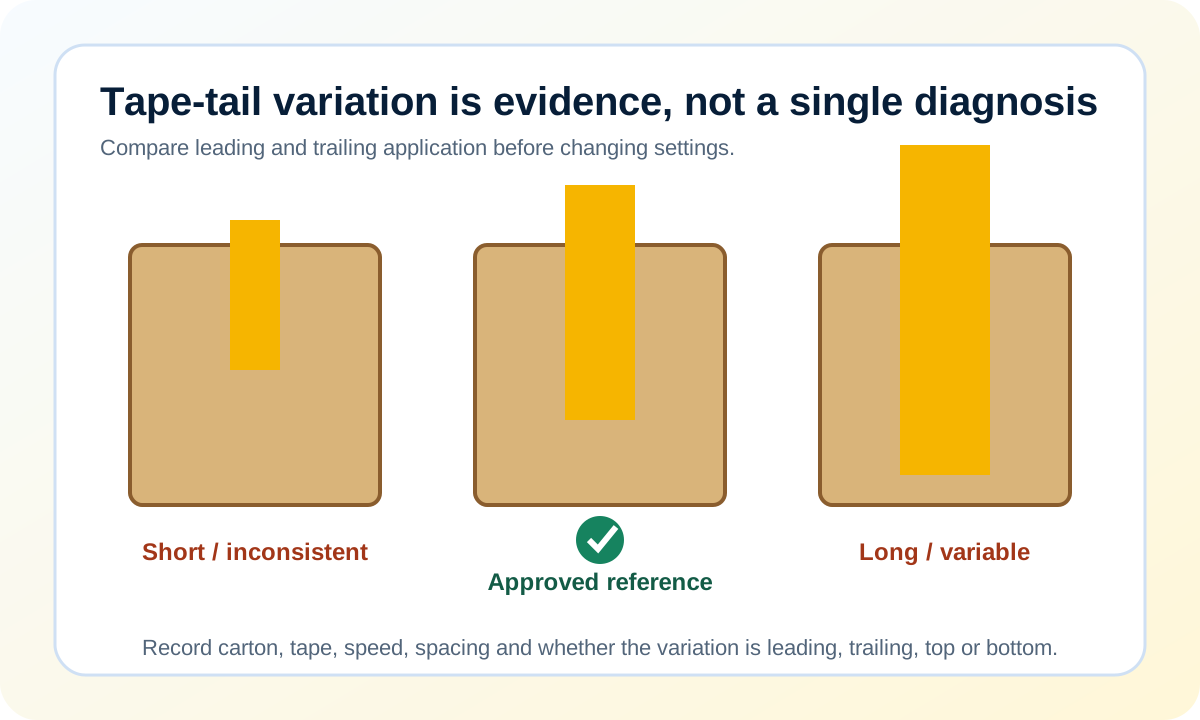
Leading and trailing tails help secure the tape from the centre seam onto the end panels. An agreed acceptable sample should show where each tail begins and ends, whether the tape remains centred and how it is wiped onto the board. Without that reference, operators may repeatedly adjust the machine to different personal preferences.
First establish whether the variation affects both tails, only the leading tail, only the trailing tail or the cut edge. Record carton size, run order, conveyor state, tape roll and machine condition. A repeatable pattern narrows the investigation more effectively than changing several settings at once.
| Observed pattern | Possible area to inspect | Evidence to collect |
|---|---|---|
| Both tails change with line speed | Carton speed, pitch, slip or transfer consistency. | Fixed-view video and speed/state record for acceptable and failed cartons. |
| Leading tail varies | Initial contact, carton entry angle, wipe-down start or tape presentation. | Entry alignment and first-contact close-up. |
| Trailing tail varies | Carton exit, cut-off sequence, wipe-down completion or following-carton interference. | Exit and cut cycle video, including carton gap. |
| Cut edge is ragged or incomplete | Blade condition, contamination, tape backing or tape-head mechanism. | Safe isolated inspection by a competent person and identified tape roll. |
| Tape tail lifts after a delay | Board surface, adhesive, storage/application conditions or wipe-down. | Time-stamped seal checks and conditioned carton/tape samples. |
What is an acceptable tape tail on a sealed carton?
An acceptable tape tail is the leading or trailing portion of tape applied from the centre seam onto the carton end panel in the position and condition agreed for that application. The exact length is machine-, tape- and carton-specific and should be confirmed from the selected tape head and representative samples rather than assumed from a generic value.
Approve a physical sample or clear photograph showing top and bottom seals, centring, cut quality, wipe-down and permitted variation. Use the same reference during trials, changeovers and fault diagnosis.
Can carton spacing change the trailing tape tail?
Carton spacing can affect the trailing application if the following carton enters too soon, the tape head does not complete its return or cut cycle, or stop/restart behaviour changes carton speed through the sealing zone. The exact interaction depends on the machine design.
Compare tail consistency at the approved pitch, during a close-gap condition and after a restart. If spacing changes the result, correct the release and control sequence before compensating with a tape-head adjustment.
When should the tape roll be treated as a possible cause?
Treat the tape roll or tape condition as a possible cause when the fault began with a roll change, varies between batches, changes with storage or temperature, shows inconsistent unwind, or is accompanied by adhesive transfer, stretching, tearing or poor cut-off.
Record the tape specification and roll identifier and compare with an approved roll under the same machine and carton conditions. Do not change tape and machine settings simultaneously, because the result will not identify which variable resolved the fault.
When does variable tape application require tape-head service?
Service is appropriate when approved cartons and tape are presented correctly but tail length, tracking, wipe-down or cut-off remains inconsistent; when safe inspection identifies wear, damage or contamination; or when the machine cannot hold the documented setting.
Stop and follow the machine instructions before accessing the tape head, blade, rollers or stored-energy components. HSE maintenance guidance emphasises planned, safe maintenance by competent people. See HSE machinery maintenance guidance.