Carton or tape variation
Check board surface, flap condition, moisture, cold condition, tape identity and roll conditioning.
Problem solving
Find practical advice for slow hand taping, poor tape seals, mixed carton sizes, packing bottlenecks and carton sealing faults.
Advice for packing teams where hand taping boxes is slowing dispatch, production or end-of-line carton sealing.
Reduce the risk of cartons opening in transit by checking tape, case quality, flap control and carton sealing method.
Improve inconsistent tape seals on shipping boxes with a case taper matched to carton size, tape type and packing flow.
Practical checks when packaging tape does not stick properly to cartons, including tape choice, pressure and case quality.
Reduce tape waste and uneven tape lengths by moving from hand taping to more controlled carton sealing equipment.
Fix carton sealing bottlenecks where packed boxes wait before dispatch, labelling, palletising or courier collection.
Choose case taper equipment for dispatch areas where mixed carton sizes cause manual adjustment and queueing.
Reduce repetitive hand taping work with carton sealing equipment designed around the operator and packing bench.
Improve outward carton presentation with cleaner, straighter and more repeatable tape application.
Troubleshooting advice for case taper jams, skewed boxes, poor feeding and interruptions around the sealing section.
Check carton strength, guide pressure and machine setup where boxes are being damaged during sealing.
Advice for cartons where top flaps spring open before or during the tape sealing process.
Reduce warehouse dispatch delays caused by manual box taping, mixed orders and end-of-day courier cut-off pressure.
Understand tape usage and roll changes when hand taping or carton sealing becomes too inefficient.
Problem diagnosis
Tape, board, setup, carton presentation and worn parts can produce similar symptoms. Record what happens before changing several settings at once.
Check board surface, dust, temperature, tape age and wipe-down before changing mechanical settings.
Tape not sticking →Review tape path, guides, case entry, roller condition and whether cartons remain square through the head.
Inconsistent tape seals →Inspect for adhesive build-up, incorrect loading, blade damage or worn tape-head components using the machine instructions.
Tape-head blade checks →Check overfilling, board damage, guide pressure, drive contact and transfers before and after the sealer.
Case taper jamming →Confirm fold sequence, board memory, fill height and the timing or position of any flap-closing mechanism.
Carton flaps not staying closed →Measure the complete cycle and peak queue before deciding whether semi-automatic, automatic or random sealing will remove the constraint.
Manual box taping too slow →Record the original settings, carton, tape and symptom. Make only the adjustment permitted by the operating instructions, then run a repeatable sample. Multiple simultaneous changes make it difficult to identify the cause and can hide a fault that returns on the next format.
Stop and use the manufacturer’s service route where guards, interlocks, electrical components, driven mechanisms or blades require access beyond normal operator tasks. Do not defeat a safety device to continue production. Send photographs and video from a safe position together with the machine identity and the affected carton.
A simple log of date, carton, tape, symptom, setting and outcome helps identify recurring causes. It also gives the service engineer evidence of whether the issue follows a specific carton, shift, tape delivery or machine condition.
Fault evidence
The fastest route to a repeatable correction is to preserve the failed carton, record the exact symptom and separate material, presentation and machine-condition causes.
| Observed symptom | First evidence to collect | Detailed guidance |
|---|---|---|
| Tape lifts or has poor adhesion | Board surface, dust, storage temperature, tape batch and wipe-down contact. | Tape not sticking to cartons |
| Tape is wrinkled or off-centre | Case entry angle, flap alignment, tape path, guide position and roller condition. | Inconsistent tape seals |
| Tape fails to cut cleanly | Loading route, adhesive build-up, blade condition and the point at which the tail forms. | Tape-head blade diagnosis |
| Carton skews, stalls or jams | Filled weight, case squareness, belt contact, transfers and the preceding carton gap. | Case taper jamming problems |
| Carton opens after dispatch | Approved seal sample, tape overlap, board damage, storage and handling after sealing. | Cartons opening in transit |
Run the same carton and tape through the same controlled setup more than once, then change one variable at a time. If the fault follows a tape batch, board finish, cold store condition or dusty carton, changing mechanical settings may hide the cause rather than correct it. If the symptom follows the machine position or appears across materials, record the relevant tape-head, guide, belt or transfer condition.
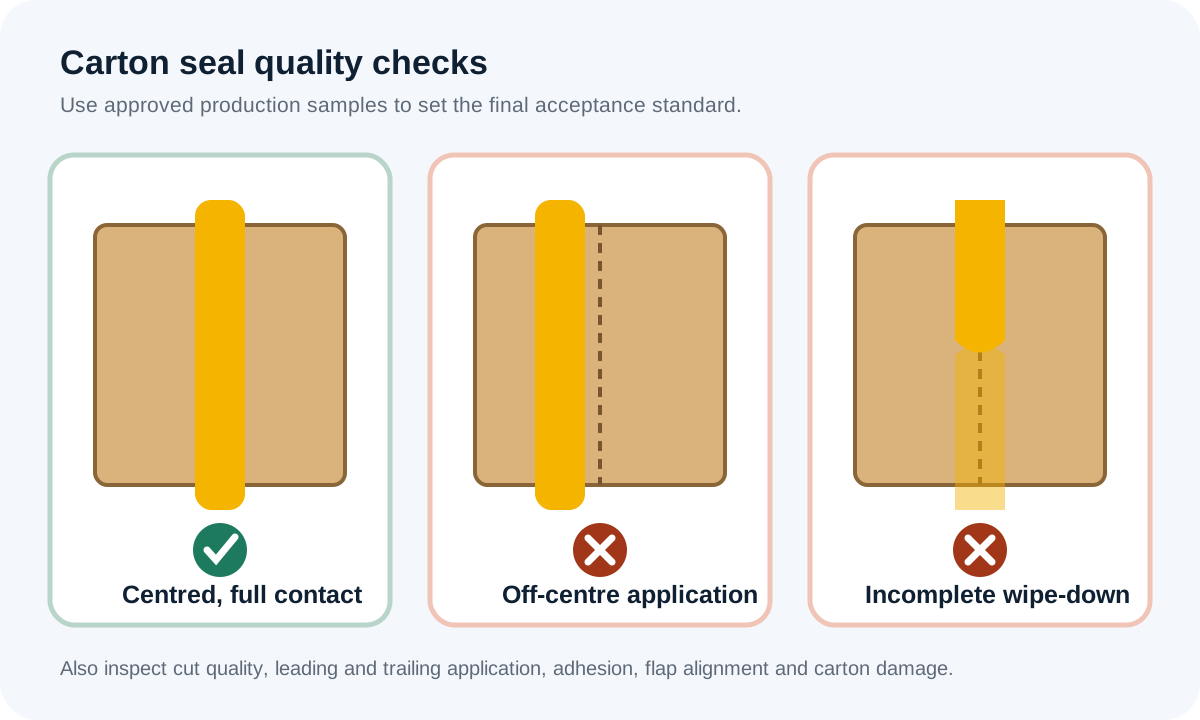
Keep a clearly dated example of an acceptable top and bottom seal. Photograph the centre seam, leading and trailing tape application and any label-clearance requirement. Compare failed samples with that reference so operators and service engineers are describing the same defect.
Cleaning and normal checks must follow the machine instructions. Blade work, guarded areas, powered adjustments and internal service tasks require the correct isolation procedure and competent personnel. Do not reach into moving equipment or bypass a guard to observe a fault. Where the cause remains uncertain, send the evidence to case taper breakdown support rather than continuing uncontrolled adjustments.
Final technical resource layer
Carton sealing symptoms often cross material, presentation and machine boundaries. Record the fault, isolate variables and retain the evidence.
Check board surface, flap condition, moisture, cold condition, tape identity and roll conditioning.
Observe the carton before belt contact and through upstream/downstream transfers.
Stop and isolate before inspection, record the symptom and escalate work beyond operator authority.
Buyer questions
Treat a sealing fault as evidence to classify, not as permission to alter every available setting.
The same visible symptom can be produced by carton variation, tape condition, presentation, machine wear, control timing or an interaction between them. For example, off-centre tape may follow carton skew, unequal guidance or tape tracking. Classify when and where the fault appears before assigning a component cause.
Use observations from outside guards, fixed camera views, retained cartons, fault history, control messages and safe stopped inspection in accordance with the machine instructions and site procedure. Do not reach into moving belts, rollers or tape heads, defeat guarding or place a camera where it creates an access or entanglement risk.
Changing one variable at a time makes the result attributable. If tape, guide position, belt pressure and speed are changed together, an improved seal does not identify the original cause and may introduce a hidden compromise. Record the baseline, make the authorised change, repeat the same sample and compare against the approved result.
An application review is appropriate when cartons, contents, tape, environment, format range or surrounding equipment have changed; the fault affects a distinct carton family; operators repeatedly compensate; or the existing machine cannot maintain an approved result within its intended setup. Reconfirm the process and samples before treating recurrence as routine wear.
Browse the complete case taper buyer-question library · Discuss your cartons and packing process · Related answers: Why do cartons skew or rotate? · Why do carton tape tails vary?
Fault evidence
Record the carton, tape, setting and operating event before changing several variables at once.
Use start-up, format change, tape change, stop/restart and adjustment as defined inspection events.
Classify upstream presentation, sealer, downstream blocking, planned and quality stops.
Link replaced parts and adjustments to the symptom and confirmation result.