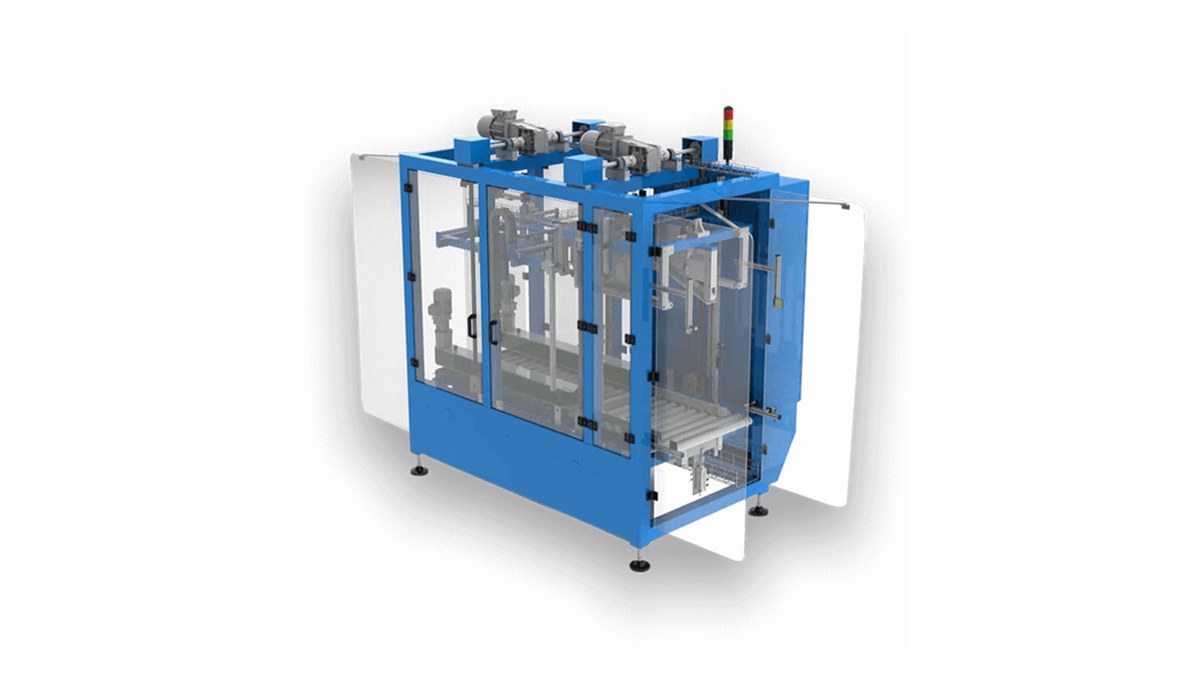
When a carton sealer is the right search term
Many buyers use the terms carton sealer, case taper, case sealer and box taping machine to describe the same requirement: a machine that applies pressure-sensitive tape to cartons more consistently than hand taping.
The right recommendation depends on the carton size range, case weight, tape width, case presentation and whether the operator or the machine closes the top flaps.
Top-and-bottom sealing requirements
Most dispatch and production operations want a clean top and bottom centre seal. A carton sealer should be checked against carton board quality, flap memory, tape adhesive, case weight and the amount of compression needed to hold the flaps correctly.
Choosing between manual feed and automatic feed
Semi-automatic carton sealers suit operator-fed work, batch packing and compact dispatch areas. Automatic case tapers make more sense where cartons arrive in a steady flow and the sealing stage must keep pace with the line. Random case sealers help where carton sizes change frequently.
Details that help with a quote
Send carton dimensions, packed weight, tape width, photos of typical cases, target output and the available infeed and outfeed space. These details make it easier to recommend a carton sealer that fits the real packing process rather than a catalogue assumption.
Next step
For a practical recommendation, send carton dimensions, packed case weight, tape details, target output and photos of the current packing area. The aim is to match the case taper to your cartons and workflow, not to force a standard machine into the wrong process.
Use the case taper quote form or call 01494 623015.