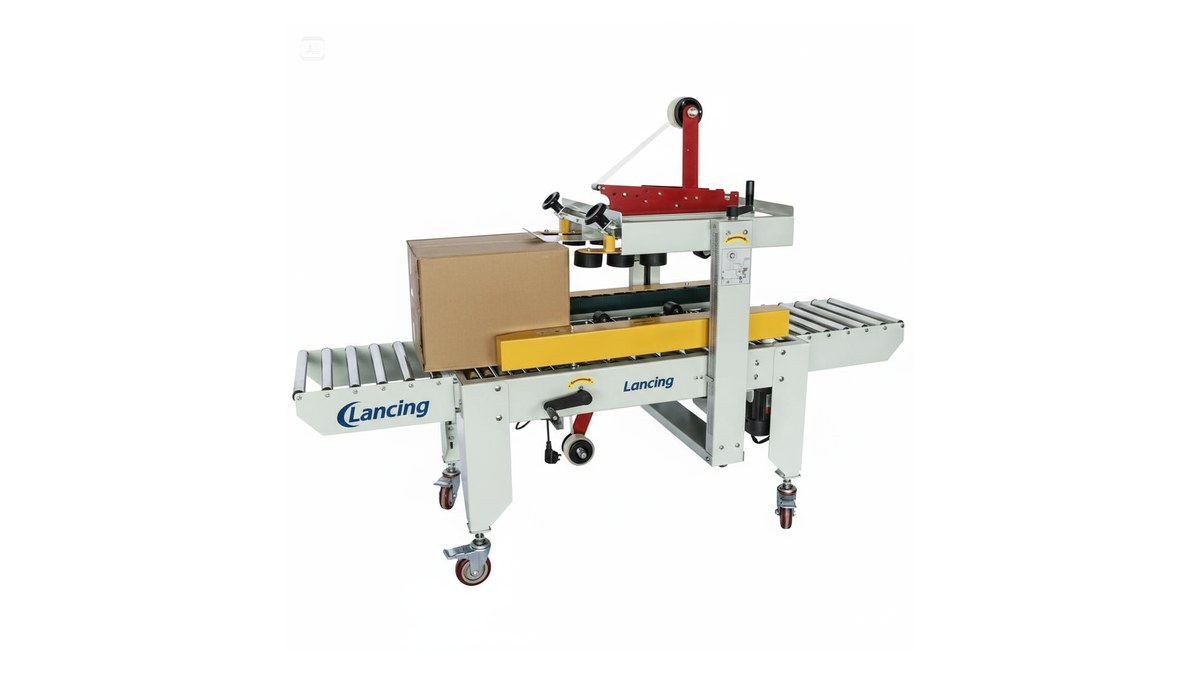
Why this matters
For case taper payback, the issue is usually that the business case is unclear if only the machine price is considered. A good case taper decision looks at the whole packing process: carton sizes, product handling, operators, tape specification, line speed and support after installation.
What good looks like
Build the comparison from measured carton volumes, manual-sealing time, tape use and rework, using the same time period for each option. Count released operator time only where it can be removed or used productively, and include the complete installed project plus operating and maintenance costs. The case taper ROI methodology explains the calculation and the evidence needed for each assumption.
Checks before you buy
Measure the smallest and largest cartons, check filled case weights, confirm whether top flaps are already closed and note the number of cartons sealed per hour. It is also worth checking tape width, case quality, operator reach and the space needed for safe maintenance.
Getting a useful recommendation
When you send a clear description of the current process, the recommendation can focus on practical improvements rather than generic machinery. That improves quote accuracy and helps avoid buying a machine that is too small, too slow or more complex than necessary.
Next step
For help choosing the right machine, compare the case taper machine range, read the buyer guide or send your carton details through the quote form.