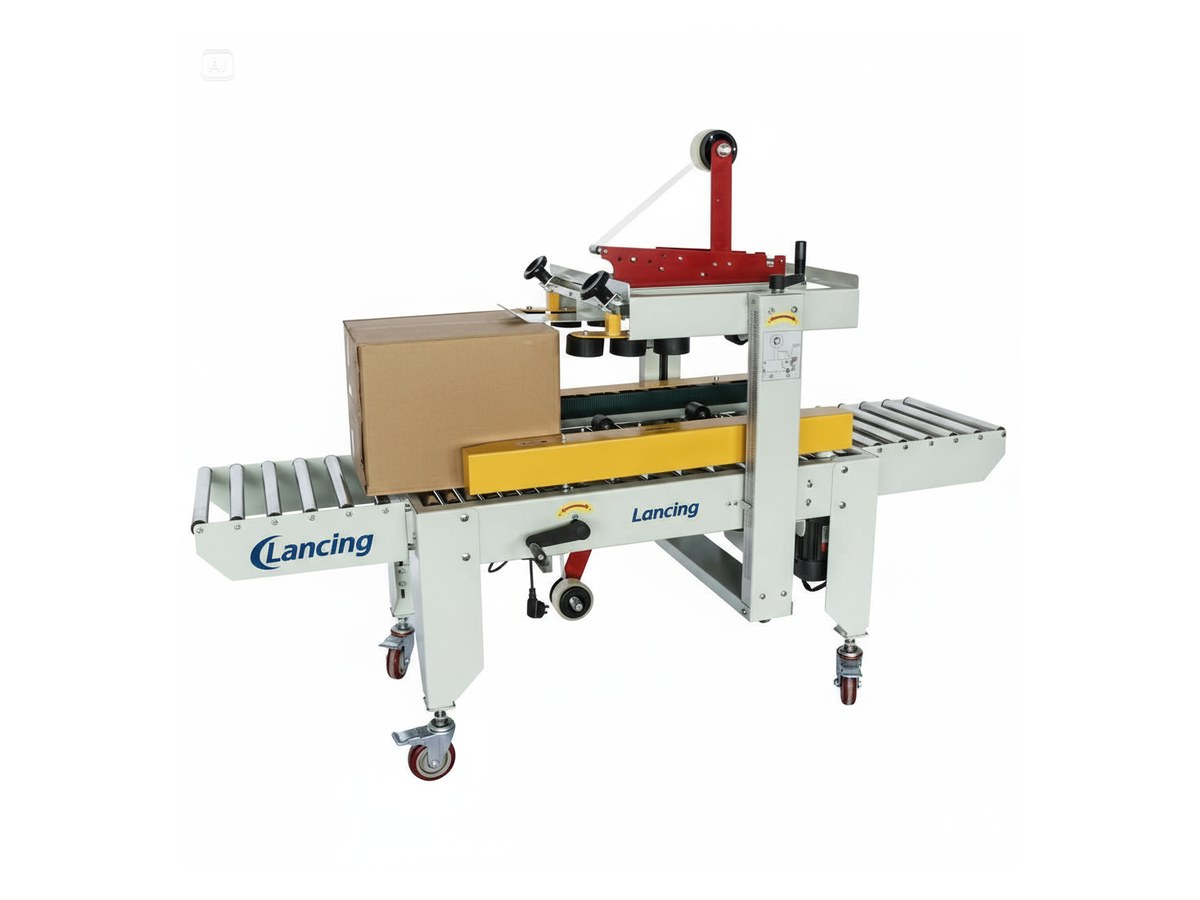
Where this machine fits
A case taper for light boxes is worth considering when light cartons can shift, skew or lift if the machine is not set correctly. It should be specified around the carton first, then around the line layout, operator method and support requirements.
Specification checks
Useful checks include box stiffness, product fill level, belt grip and tape application pressure. These details influence the machine frame, guide settings, tape head, belt arrangement and whether conveyors or packing bench changes are needed.
What good performance looks like
Good performance means cartons feed squarely, tape lands on the centre seam, the machine is easy to adjust and operators can clear normal packing volumes without creating a new bottleneck.
Questions to ask before requesting a quote
Before requesting a quote for case taper for light boxes, check whether the same operator will close flaps, whether cartons arrive square, how boxes are moved after sealing and whether the machine needs to fit into an existing conveyor or bench layout. Clear answers help avoid overspecifying the machine or missing an important support requirement.
Why carton samples matter
A sample carton tells more than a broad description. The board quality, fold memory, filled weight and seam position all affect how a case taper handles the box. If the site uses several carton sizes, send the smallest, largest and most common cases so the recommendation covers the real operating range.
Next step
For practical advice, compare the case taper machine range, read the buyer guide or send carton details through the quote form.